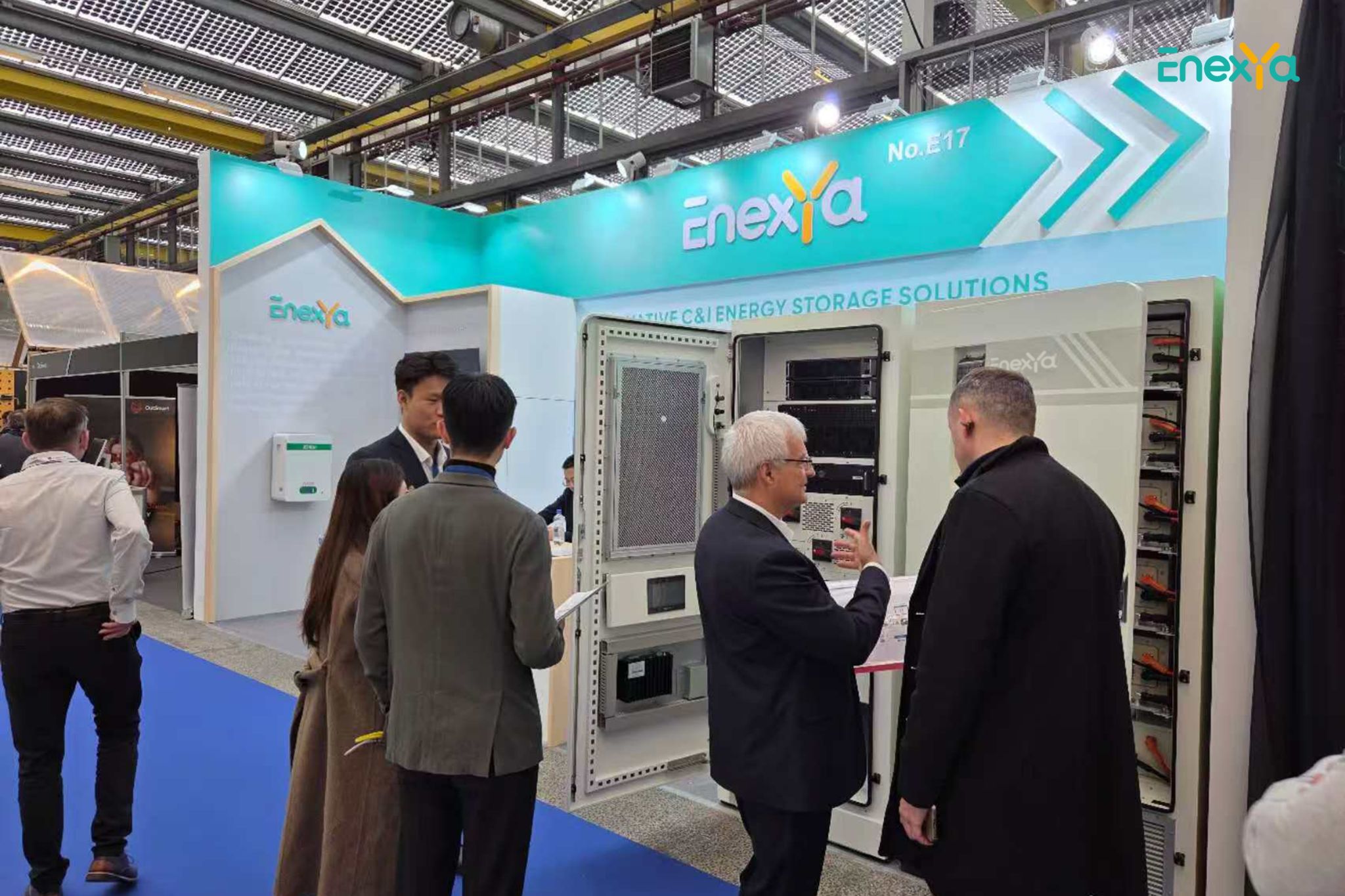
During EnerGaïa Forum 2025 in Montpellier, Enexya spoke with Bruno Bouteille, CEO of SIREA, about one of the key components behind an intelligent battery energy storage system: the Energy Management System (EMS).
While batteries store energy and power conversion equipment manages the flow of electricity, the EMS provides the intelligence needed to coordinate how the complete system operates.
In this interview, Bruno explains how Smart EMS, developed by SIREA and integrated into Enexya’s energy storage solutions, connects storage equipment with site requirements and external energy signals — helping transform battery storage from a standalone asset into an intelligently managed energy system.
The collaboration between Enexya and SIREA brings together complementary expertise across the energy storage system.
Enexya contributes expertise in battery energy storage systems and power conversion, while SIREA brings extensive experience in energy control, automation and intelligent energy management through Smart EMS.
Together, these capabilities support an integrated approach to commercial and industrial energy storage, where battery technology, power conversion and energy management are considered as parts of one complete system.
As Bruno explains during the interview, this combination is particularly relevant for applications such as solar self-consumption and energy flexibility, where the value of storage depends not only on how much energy can be stored, but also on how intelligently that energy is managed.
At its core, an Energy Management System determines when, why and how a battery energy storage system should operate.
Smart EMS communicates with the key equipment within the storage system, including the battery and power conversion system, while monitoring the wider operating environment.
This allows the EMS to coordinate energy flows according to a defined strategy rather than simply following a fixed charging and discharging schedule.
Depending on the project requirements, Smart EMS can support different operating objectives, including:
Increasing the use of on-site solar generation
Managing battery charging and discharging
Coordinating site consumption and energy storage
Supporting peak management and load shifting
Enabling greater energy flexibility
In this way, the battery becomes part of a wider site energy system rather than operating as an isolated asset.
One of the important topics highlighted by Bruno during the EnerGaïa interview is that intelligent energy management increasingly extends beyond the equipment installed on site.
A battery energy storage system may also need to respond to external information and energy-market signals.
Smart EMS can integrate relevant external data and services, including grid information, electricity tariff signals and information provided through energy aggregators.
These inputs can help the system adapt its operating strategy according to changing energy conditions.
For commercial and industrial users, this creates opportunities to move beyond basic battery operation toward more flexible strategies that coordinate generation, storage, consumption and interaction with the wider energy system.
As energy storage becomes more intelligent and connected, communication and cybersecurity are also becoming increasingly important.
Smart EMS supports bidirectional communication between the energy storage system and connected digital environments, enabling operational data to be monitored while authorised instructions can be communicated back to the system.
For Enexya and SIREA, intelligent energy management therefore goes beyond optimizing energy flows.
It also requires consideration of secure communication, controlled system access and responsible data management.
This becomes particularly important as battery storage systems interact with cloud platforms, aggregators and other external energy services.
Cybersecurity is therefore an integral consideration within Enexya’s approach to connected and intelligent energy storage.
The conversation with Bruno at EnerGaïa highlights a broader evolution taking place across the energy storage industry.
Battery capacity and power remain fundamental system specifications. But increasingly, customers also need to understand how that capacity will be used.
A successful operating strategy needs to consider factors such as site consumption, solar generation, electricity tariffs, grid conditions and operational priorities.
This is where the EMS becomes essential.
By combining Enexya’s battery energy storage expertise with SIREA’s Smart EMS capabilities, storage systems can be configured around the requirements of each project and adapted as those requirements evolve.
The result is an approach that brings together battery storage, intelligent control and energy flexibility within one integrated system.
Watch the interview with Bruno Bouteille, CEO of SIREA, recorded at EnerGaïa Forum 2025, to discover how Smart EMS connects battery storage, intelligent control and external energy signals.
Planning a commercial or industrial battery energy storage project? Contact Enexya to discuss how energy storage and Smart EMS can be configured around your project requirements.